Nobody takes a quiz just to pass the time, even when they think they do. They take it because they want to know something about themselves: what their communication style says about them, or whether their taste in movies matches their personality. That self-discovery impulse is why viral quizzes spread the way they do, and why creators and marketers keep coming back to them as an engagement format.
This article breaks down the psychology behind quiz-taking behavior, what separates a quiz that gets shared from one that gets abandoned, and how creators use quizzes to build real audience engagement.
Table of Contents
Why Quizzes Are One of the Most Engaging Content Formats Today
Most content asks nothing of the reader. An article, a video, a social post: the user receives it passively. A quiz is different. It requires a response at every step, which means the user is actively involved from the first question to the final result.
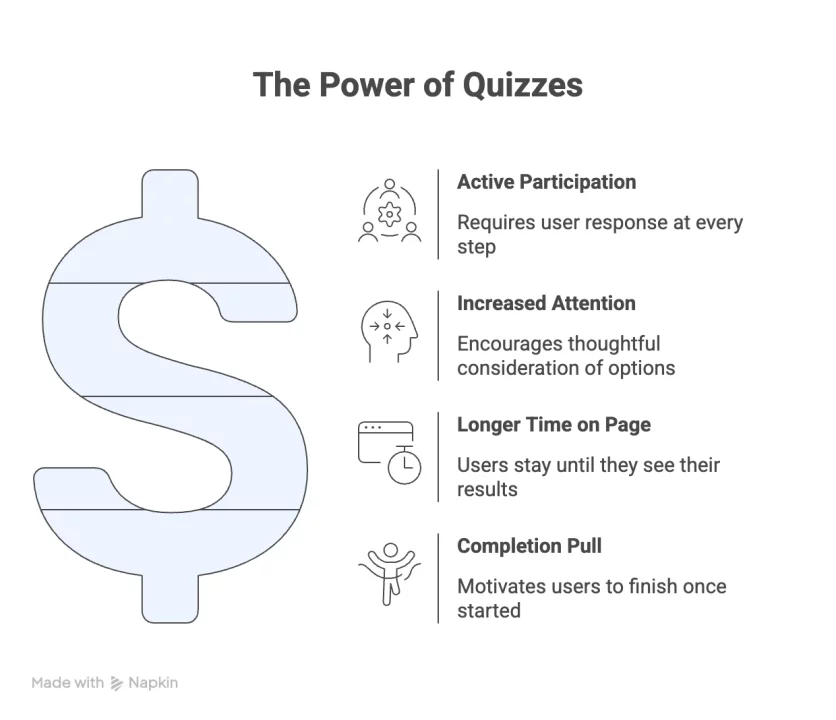
That participation changes how people experience the content. Instead of skimming, they’re making choices. Instead of half-reading, they’re thinking about each option in relation to themselves. That level of attention is hard to get from static content, and it shows in the metrics like time-on-page, scroll depth, bounce rate, and completion data. Users stay on quiz pages longer than on comparable written content because they have a reason to: they’re waiting for their result.
And because every answer is something the user chose to give, quizzes are also one of the most natural ways to collect zero-party data: information people share about their own preferences, needs, and intentions, volunteered directly rather than inferred from behavior.
Why People Love Personality Quizzes (The Psychology Behind It)
Personality quizzes tap into something consistent in human behavior: people want to understand themselves, and they want that understanding reflected back to them.
When someone takes a quiz titled “What kind of creative thinker are you?”, they want to see whether the result matches how they already see themselves, or reveals something they hadn’t articulated before. Psychologist Todd Kashdan‘s research identifies this as identity curiosity: one of five distinct forms of curiosity, specifically the drive to understand your own traits and tendencies.
The label matters too. Knowing you’re a “collaborative thinker” gives you something concrete to hold onto and share. Results with a clear identity attached perform better than vague ones because the emotional payoff is stronger. When the result lands well, there’s a moment of recognition: “This is accurate, this is me.” That moment is what makes personality quizzes work, and what makes people want to share them.
The Real Triggers Behind Viral Quizzes
Quizzes don’t go viral by accident. The ones that spread consistently share a few specific characteristics.
Emotional Relevance Drives Shares
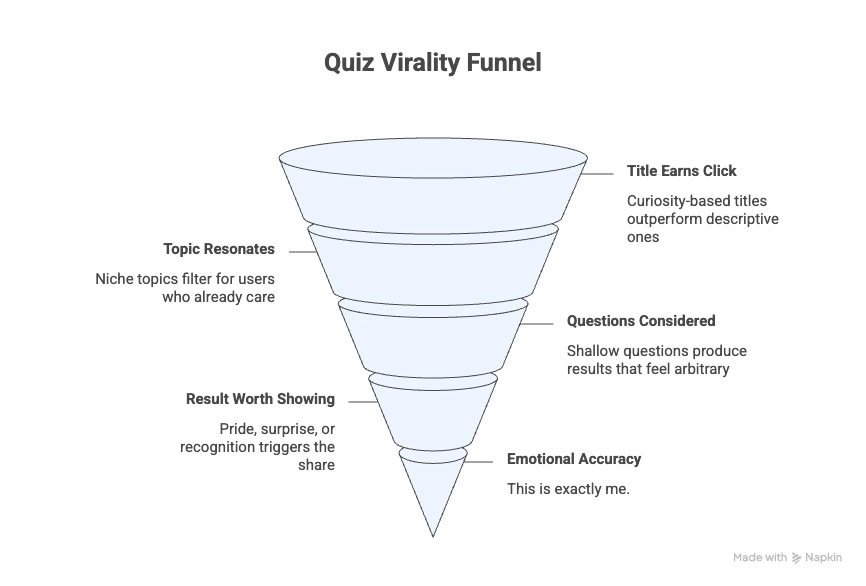
A quiz result gets shared when it feels accurate. Not flattering, not generic: accurate. When someone reads their result and thinks “this is exactly right,” they want other people to see it. Therefore, the result has to feel specific to them.
The result can only feel accurate if the questions that led there felt intentional. Shallow or leading questions produce arbitrary results, and users sense it. Questions that probe specific behaviors and choices produce results that users actually believe.
Results Must Feel Worth Sharing
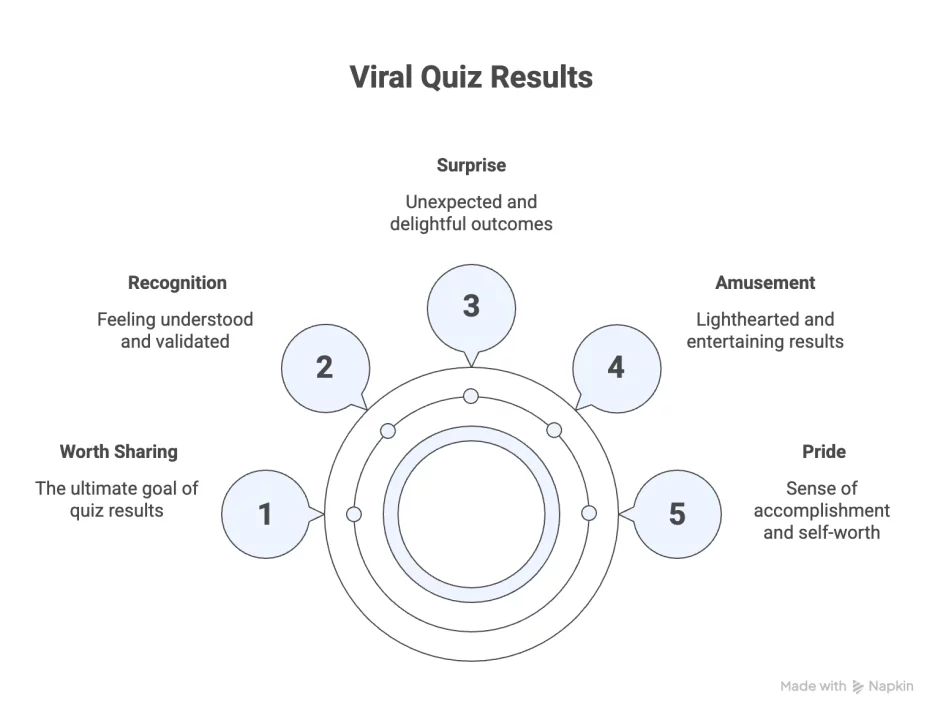
A result worth sharing makes the user feel something: pride, amusement, surprise, or recognition. Generic outcomes like “You are creative and enjoy helping others” don’t create that. Creators often treat the result as a formality. It’s actually the most important part of the experience.
Titles Decide Whether People Click
Before any of the psychology kicks in, the title has to get the click. Curiosity-based titles consistently outperform descriptive ones. “Which type of thinker are you?” works better than “Personality quiz for creative professionals” because it creates an open question the user immediately wants answered about themselves.
The title should feel like it’s addressing the user directly, even if it doesn’t use “you.” “What does your decision-making style say about you?” works. “A quiz about decision-making styles” doesn’t.
Specific Quizzes Perform Better Than Broad Ones
Broad quizzes underperform because they appeal to everyone and resonate with no one. “What’s your personality?” is too general to feel personal. “What kind of creative thinker are you?” speaks to a specific person with a specific interest. That person clicks, completes, and shares. Specificity works because the user already sees themselves in the premise before the first question, which makes the result feel like confirmation rather than a random assignment.
What Makes a Quiz Go Viral
A quiz that goes viral is easy to start, quick to complete, and delivers a result that feels worth the time spent. That means the questions are clear and don’t require much explanation. Most high-performing quizzes stay between 5 and 15 questions: enough to feel substantive, short enough to finish. The flow moves naturally from one question to the next rather than jumping between unrelated topics.
Logical question flow matters more than most creators realize. Questions that feel like they belong together keep the user in a consistent frame of mind and make the result feel more coherent. Questions that jump between unrelated topics create friction and reduce the sense that the result is accurate.
The result page also has to deliver. Users who reach the end and get a one-line result feel cheated. Users who reach the end and get a specific, well-written description of their type feel rewarded. That reward is what turns a completed quiz into a shared one.
Types of Quizzes That Consistently Perform Well
Personality quizzes dominate in terms of shares and completion rates, for the reasons already outlined. The format maps naturally to identity curiosity and produces results people want to discuss.
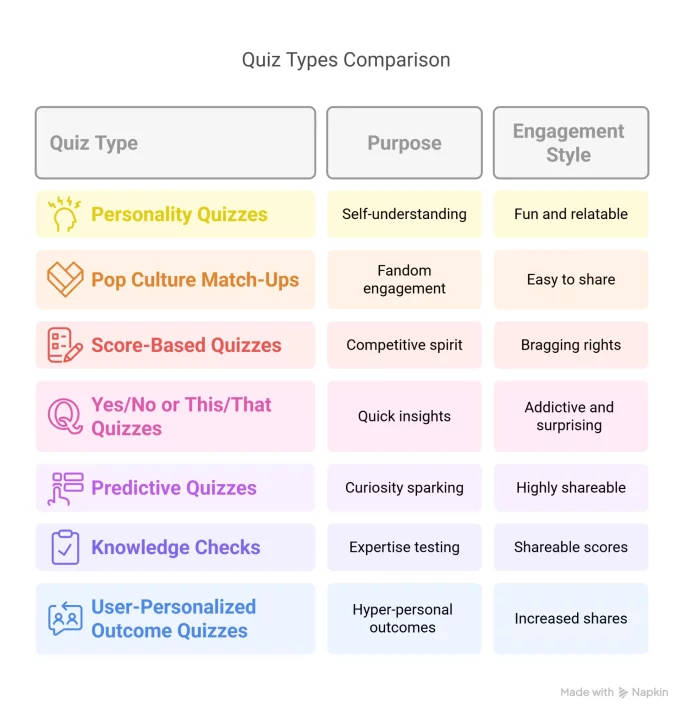
Within that category, a few quiz types have proven particularly durable. Love language quizzes are currently among the most trending quiz formats. They attract users curious about how they connect in relationships, a topic with broad and consistent appeal. Fashion style quizzes work well because style is both personal and social: users want to know their type, and they want to compare results with others.
Leadership style quizzes perform well with professional audiences who are actively thinking about how they work and manage. True or false quizzes work across almost any topic because the format is instantly familiar, low-effort to start, and satisfying to complete
What these formats share is that the topic already matters to the user before they start. They’re not just taking a quiz: they’re exploring something they’re already curious about.
What Keeps Users Engaged Until the End
Getting a user to click is one challenge. Keeping them through the final question is another.
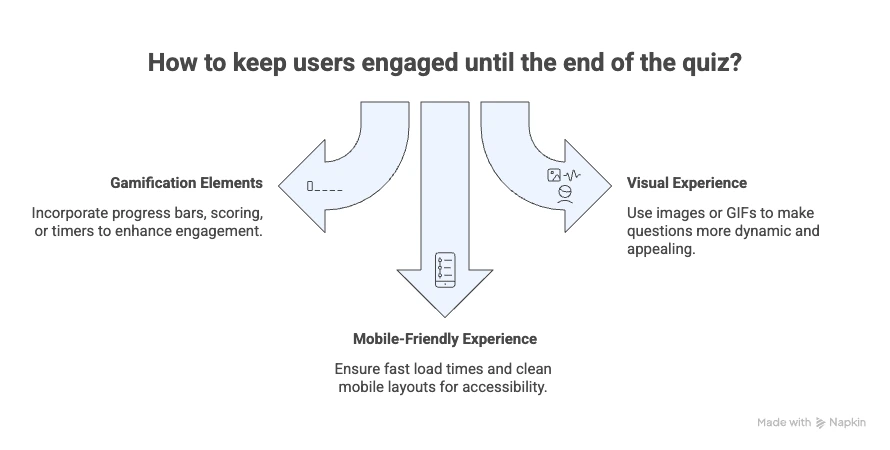
Gamification Elements
Progress bars, scoring, and timers each work differently, but quizzes with some form of progression feedback see completion rates up to 30% higher than those without.
Visual Experience
A quiz that looks consistent with your brand builds trust before the first question loads. Colors, fonts, and imagery that match your existing identity reduce friction and make the experience feel intentional rather than generic. Branded quizzes also perform better in recall: users are more likely to remember where they took the quiz and return to the source.
Mobile-Friendly Experience
Most online quizzes are taken on mobile. A one-second delay in load time can reduce conversions significantly.
How Quizzes Drive Engagement and Audience Growth
The engagement benefits of quizzes extend beyond the quiz itself. Users who complete a quiz spend more time on the site. Users who share a result bring new visitors in. Users who find the result accurate often return to take other quizzes from the same source.
That combination of time-on-site, sharing behavior, and repeat visits makes quizzes one of the more efficient content formats for audience growth.
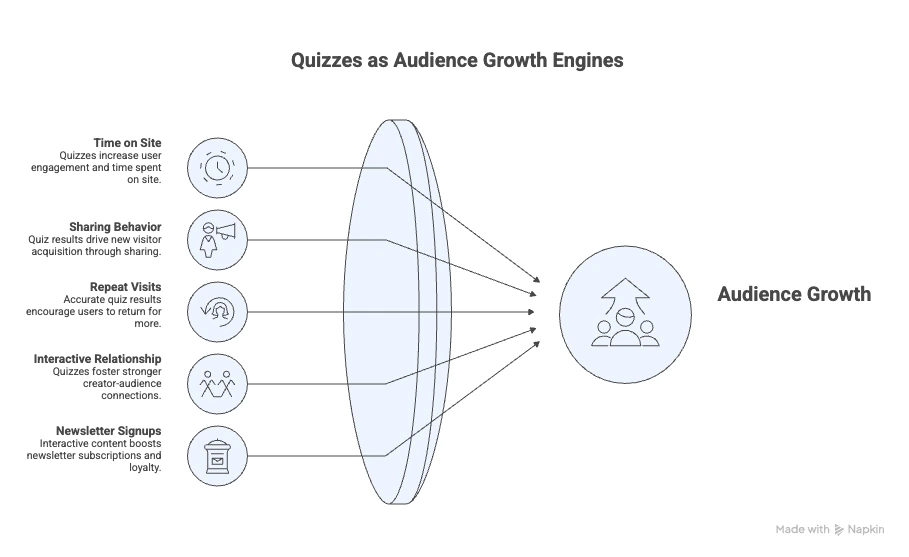
Quizzes also create a different kind of relationship between the creator and the audience. Users who engage with interactive content feel more connected to the source than users who passively read an article. That connection increases the likelihood of newsletter signups, return visits, and audience loyalty over time.
How Creators and Marketers Use Quizzes Strategically
Bloggers use quizzes to reduce bounce rates and increase time on page. A quiz embedded in a relevant article gives readers something to do beyond reading, and the result often links back to more content on the same topic.
Content creators use quizzes to generate audience interaction that’s harder to get from static posts. A quiz result people share is also a piece of content that travels with attribution, meaning it brings the creator’s name along with it.
Brands use quizzes as lead magnets. A well-designed quiz that delivers a genuinely useful result gives users a reason to share their email before or after they see it. That makes it one of the more effective ways to generate leads with quiz.
Community builders use quizzes to create shared experiences. When members of a community take the same quiz and compare results, it builds a connection through a common reference point.
Bringing These Quizzes to Your Website
Building a personality quiz that actually performs requires more control than most basic quiz tools offer. You need to define how results are calculated, write outcome descriptions that feel specific and personal, and customize the experience to match your audience and brand.
Quiz and Survey Master gives you that control within WordPress. You can build personality quizzes with custom result logic, control exactly what users see at the end, and adjust the experience without being constrained by rigid templates. For creators who want to treat quizzes as a real content strategy rather than a one-off experiment, that flexibility matters.
Want to create your own viral quiz? Start building one with QSM.