Most WordPress stores lose sales not because their products are bad, but because customers feel overwhelmed. When visitors land on a store and see dozens of options, they hesitate. That hesitation leads to drop-offs and abandoned carts.
One of the most effective ways to solve this problem is to build a product recommendation quiz that guides users to the right product quickly and confidently. Instead of browsing endlessly, customers answer a few focused questions and receive a personalized recommendation that fits their needs.
In this guide, you will learn the best way to build a product recommendation quiz in WordPress, structure it strategically, optimize it for higher completion rates, and convert quiz takers into paying customers.
Table of Contents
What Is a Product Recommendation Quiz?
A product recommendation quiz is an interactive tool that asks users a series of questions and suggests products based on their responses. When you build a product recommendation quiz in WordPress, you:
- Collect user preferences
- Use conditional logic to guide the experience
- Match answers to specific products
- Deliver personalized results
Unlike static product filters, quizzes feel conversational. They reduce friction and help customers make confident decisions. For eCommerce stores, this means better engagement and stronger purchase intent.
Why Product Recommendation Quizzes Increase Conversions
When you build a product recommendation quiz correctly, it does more than entertain. It solves real business problems. Here’s why they work.
- They Reduce Decision Fatigue: Too many options slow people down. A quiz narrows choices and simplifies buying.
- They Personalize the Experience: Shoppers feel understood. The result feels tailored, not random.
- They Increase Average Order Value: Instead of recommending one product, you can suggest bundles or complete routines.
- They Capture First-Party Data: Every response tells you something about your customer’s preferences.
- They Improve Engagement Time: Quizzes increase time on page and interaction, which supports SEO performance.
If your goal is to build a product recommendation quiz that drives measurable sales, the structure matters.
Step-by-Step Overview: How the Best Product Recommendation Quizzes Are Built
There is a big difference between creating a quiz and building one that converts. Here’s the strategic structure used by high-performing WordPress stores.
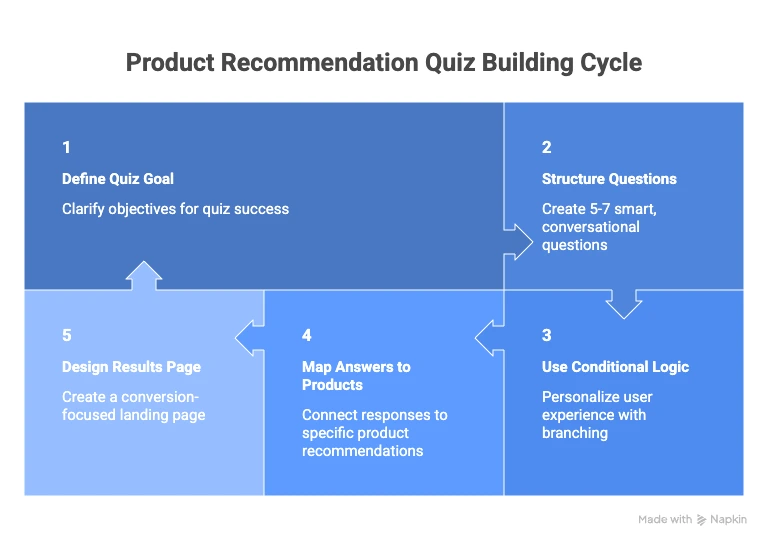
Step 1: Define the Quiz Goal
Before you build a product recommendation quiz, ask:
- Are you trying to increase sales of specific products?
- Reduce returns?
- Capture email leads?
- Increase bundle purchases?
Clarity here prevents a random quiz structure later. And your goal shapes the quiz logic.
For example, if your goal is a higher average order value, your results page may recommend 3 complementary products instead of 1. If your goal is lead generation, you’ll prioritize email capture before results.
Step 2: Structure 5–7 Smart Questions
Research shows that shorter quizzes perform better. When you build a product recommendation quiz with five to seven well-structured questions, completion rates remain strong while still gathering useful data. Start with broad questions and gradually narrow down.
For example, in a skincare store, your structure could look like this:
- What is your skin type?
- What is your main concern?
- How sensitive is your skin?
- Do you prefer fragrance-free products?
- What is your budget range?
Each question should help filter products logically. Avoid unnecessary personal details or overly technical wording. Keep the tone conversational and easy to understand.
Step 3: Use Conditional Logic
Conditional logic transforms a basic quiz into a dynamic recommendation engine. When you build a product recommendation quiz using logic branching, users only see questions relevant to their previous answers.
For example, if someone selects “Oily Skin,” the next question can focus on acne or oil control. If someone selects “Dry Skin,” the next question can focus on hydration or flakiness.
This approach creates a personalized experience and reduces unnecessary steps. WordPress plugins like Quiz and Survey Master allow you to set up conditional logic without coding, making the process accessible even for beginners.
Step 4: Map Answers to Specific Products
Mapping answers correctly is one of the most important steps when you build a product recommendation quiz. Many stores collect data but fail to connect responses to products strategically.
There are two common methods.
- The score-based mapping, where each answer contributes points toward a specific product profile.
- Direct logic mapping, where certain answer combinations trigger specific product outcomes.
Keep the final recommendations focused. Showing too many options can recreate the same decision overload you were trying to eliminate. One strong match or a curated bundle often converts better than a long list.
Step 5: Design a High-Converting Results Page
The results page is where your quiz turns into revenue. When you build a product recommendation quiz, treat the results page as a conversion-focused landing page.
Include a clear product image, a short explanation of why the recommendation fits the user’s responses, key benefits, and a strong call-to-action button. Adding a limited-time discount or bundle offer can further increase conversions.
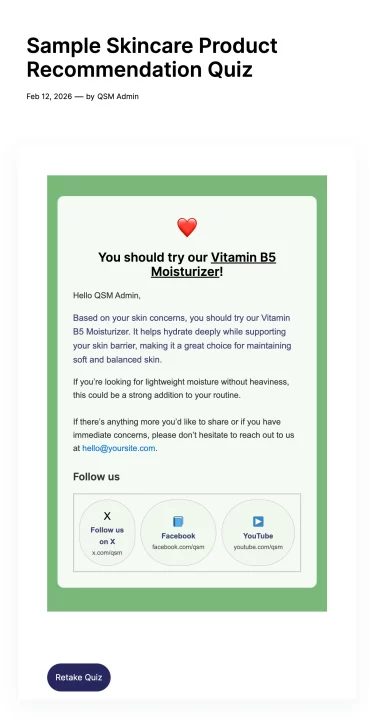
For example, your result might say: “Based on your answers, your ideal routine includes our Gentle Cleanser, Hydrating Serum, and Lightweight Moisturizer. Use code QUIZ10 for 10% off your purchase.”
You can also automate personalized result emails so users receive their recommendations in their inbox immediately after completion. Once your results page is optimized, your quiz becomes the core of a high-converting quiz funnel.
If you’re ready to implement this inside WordPress and need a detailed, step-by-step setup guide, read: How to Create a Product Recommendation Quiz in WordPress: A Comprehensive Guide
Real Example Walkthrough
Let’s consider a supplement store aiming to increase bundle sales.
The goal is to match users with the right vitamin combination. The quiz begins with:
Question 1: What is your main health goal?
Options: Immunity, Energy, Stress Support
If the user selects Energy, the next question asks about fatigue levels. If they select Immunity, the next question asks how often they get sick. A later question asks about preferred format, such as capsules or powders. If a user selects Energy and indicates high fatigue, the final result might recommend a Vitamin B Complex, an Iron Supplement, and an Energy Booster Bundle with a 10% discount.
When you build a product recommendation quiz using structured logic like this, the results feel intentional rather than generic.
Optimization Tips That Increase Completion Rate
Even if you build a product recommendation quiz with strong logic, the completion rate depends on how smooth the experience feels. Small improvements in structure, design, and flow can significantly increase the number of users who finish the quiz.
Here are practical ways to improve performance.
- Keep It Between 5–7 Questions: Shorter quizzes reduce friction. When users see a manageable number of steps, they are more likely to continue until the end. If your quiz requires more detail, consider splitting it into sections with clear progress indicators.
- Use a Clear Progress Bar: A visible progress bar sets expectations. When users know how many steps remain, they are less likely to abandon the quiz midway.
- Write Conversational Questions: Avoid technical language or long explanations. Questions should feel natural and easy to answer. The simpler the wording, the faster users move through the quiz.
- Use Visual Answer Choices: Images improve engagement and speed up decision-making. For example, showing product styles or skin types visually helps users respond quickly without overthinking.
- Limit Open-Ended Questions: Multiple-choice formats perform better than long text inputs. Open-ended questions increase effort and slow users down.
- Optimize for Mobile First: Most WordPress traffic comes from mobile devices. Ensure buttons are large enough to tap easily, images load quickly, and text remains readable without zooming.
- Add Micro-Encouragement Text: Short reassurance messages such as “Only 2 questions left” or “You’re almost done” can subtly increase completion rates by keeping users motivated.
- Offer a Clear Incentive: A discount code, bundle offer, or exclusive recommendation can motivate users to complete the quiz and take action immediately after receiving results.
- Reduce Page Load Time: Heavy images or slow hosting can cause drop-offs. Compress images and test loading speed to maintain a smooth experience.
- Test and Improve Regularly: Track metrics such as completion rate, time per question, and drop-off points. Small adjustments in wording, order, or design can lead to noticeable improvements over time.
When you build a product recommendation quiz with user experience in mind, completion rates improve naturally. Optimization is not about adding more features; it is about removing friction and guiding users smoothly from start to finish.
How to Turn Quiz Takers into Buyers
A quiz should not end at the results page. If you want real impact, you need to think beyond engagement and focus on conversion.
A well-structured quiz can act as a strong quiz lead magnet. Instead of offering a basic freebie, the quiz itself becomes the value exchange. Users answer targeted questions and receive tailored results in return. Because the interaction feels personalized, the leads generated are more qualified and more likely to convert compared to standard opt-in forms.
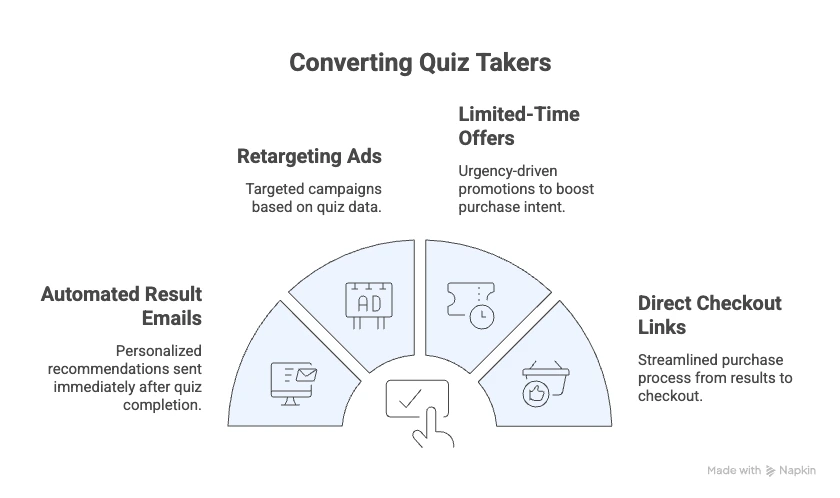
Use the insights gathered from their answers to personalize follow-ups and keep the experience consistent across channels. Add urgency where appropriate and reduce the number of clicks required to move from recommendation to checkout.
When you build a product recommendation quiz with a clear follow-up strategy in place, it shifts from being a helpful tool to becoming a structured sales system that consistently drives revenue.
If you need a complete walkthrough on connecting quiz results to WooCommerce products and automating emails, read our detailed eCommerce guide: How to Create a Product Recommendation WordPress Quiz for Your eCommerce Store.
Common Mistakes to Avoid
- Asking too many questions reduces completion rates.
- Using weak or random logic damages trust.
- Recommending too many products overwhelms users.
- Skipping email capture limits long-term conversions.
- Designing a generic results page lowers conversion potential.
- Ignoring mobile optimization increases abandonment rates.
- Failing to offer an incentive reduces urgency.
- Not tracking performance data prevents improvement.
- Overcomplicating the question flow decreases engagement.
- Neglecting post-quiz follow-up weakens revenue impact.
Final Thoughts on Building a Product Recommendation Quiz
When you build a product recommendation quiz in WordPress with clear goals, smart question flow, and strong product mapping, you turn browsing into guided buying. The difference comes from structure, not just the tool. A focused quiz reduces hesitation and moves users toward a confident decision.
Start simple. Define one clear goal, create five strong questions, and connect answers directly to specific products. Once the foundation is in place, refine the results page, test performance data, and improve the experience over time.
If you are ready to build a product recommendation quiz that drives measurable sales, use a WordPress solution like QSM to set up logic, automate follow-ups, and connect directly with WooCommerce. The right setup can turn casual visitors into informed buyers.