Zero-party data is information that users choose to share directly with a brand. This can include their preferences, needs, goals, or intent. Because it comes straight from the user, it is accurate, clear, and permission-based. For marketers, this makes zero-party data one of the most reliable sources of insight today.
Quizzes are one of the most effective ways to collect zero-party data. They allow brands to ask specific questions in a simple format, while users share details in exchange for something useful, such as a result or recommendation. When the value is clear, people are more willing to answer honestly.
This article explains how to collect zero-party data using quizzes. It covers quiz types that work well, how to design them properly, and how to use real quiz formats to turn answers into useful marketing actions.
Table of Contents
Why Quizzes Are Ideal for Zero-Party Data
Quizzes work well for zero-party data because they are built around intentional questions. Each question is asked for a reason, and users understand why they are being asked.
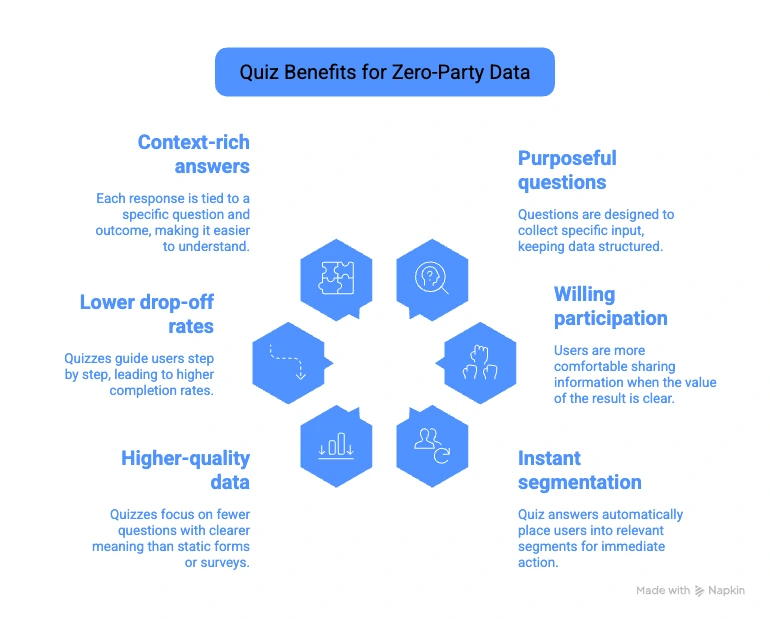
Unlike static forms, quizzes create a sense of progression. Users move from one question to the next with a clear outcome in mind. This keeps engagement higher and drop-off lower. When the value of the result is clear, users are more likely to answer honestly, which improves your ability to collect zero-party data that is accurate and actionable.
Quizzes also collect data in a structured way. Each answer can be mapped to a specific attribute, tag, or field. This makes segmentation easier compared to open-ended survey responses. Another advantage is instant segmentation. As users answer questions, they are grouped automatically based on their responses. This removes the need for manual filtering later and simplifies how you collect zero-party data in marketing at scale.
Compared to traditional forms or long surveys, quizzes usually feel shorter and more focused. They ask fewer questions, but each question carries more meaning. This results in cleaner data that can be used immediately. In fact, quizzes can improve lead quality and growth by filtering out low-intent users and capturing more relevant insights from serious prospects.
If you want a deeper understanding of why zero-party data matters and how it fits into a long-term marketing strategy, this guide explains the broader context in detail: What Is Zero-Party Data and How Marketers Can Collect It
What Types of Quizzes Collect the Most Useful Zero-Party Data
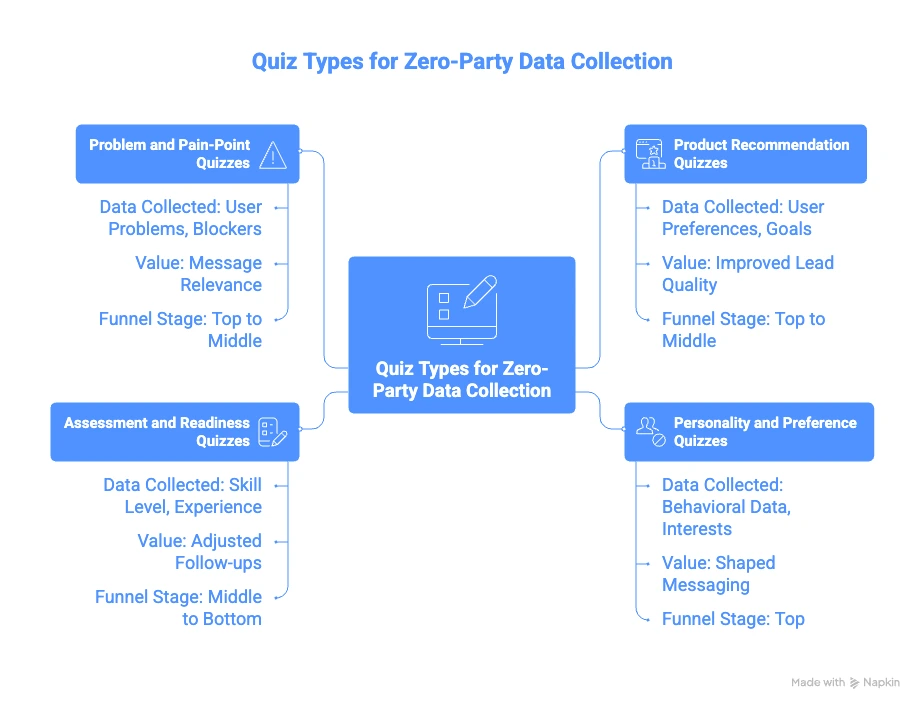
Different quiz formats collect different types of zero-party data. Each format works best at a specific stage of the funnel and supports a different marketing goal. Choosing the right quiz type depends on what you want to learn about the user and how you plan to use that information when you collect zero-party data.
Product Recommendation Quizzes
Product recommendation quizzes are designed to collect data related to user preferences, goals, and intended use. The questions usually focus on what the user is trying to achieve, what features matter to them, or what constraints they have.
This data is valuable because it helps match users with the most suitable product or service. Instead of sending everyone the same offer, marketers can guide users toward options that fit their needs, which improves lead quality and reduces drop-offs later in the funnel. These quizzes usually sit at the top or middle of the funnel, where users are exploring options and looking for guidance while brands collect zero-party data tied to purchase intent.
Personality and Preference Quizzes
Personality or preference quizzes collect behavioral and interest-based data. They help understand how users think, learn, or make decisions rather than what they want to buy right away.
Data from a personality quiz is useful for shaping messaging, content format, and tone. For example, it can help decide whether a user should receive detailed guides, short tips, or visual content in follow-up communication. These quizzes work best at the top of the funnel and are often used for engagement and list building.
Try this Demo Personality Quiz to find out your personality type based on your personal, intellectual, and emotional traits.
Assessment and Readiness Quizzes
Assessment or readiness quizzes focus on identifying a user’s current level or stage. They collect data related to experience, maturity, or readiness to take action.
This data is valuable because it helps teams avoid treating all leads the same way. Users who are still learning can receive educational content, while users who are closer to action can receive more direct follow-ups. These quizzes are most effective in the middle to bottom of the funnel and support efforts to collect zero-party data linked to readiness.
Problem and Pain-Point Quizzes
Problem or pain-point quizzes are used to identify the main challenges a user is facing. The questions focus on blockers, gaps, or issues that slow progress.
This data helps improve targeting and message clarity. It allows marketers and sales teams to address the exact problem the user has shared, instead of relying on generic assumptions. These quizzes can be used at both the top and middle of the funnel.
How to Design Quizzes for Zero-Party Data Collection
Designing a quiz for zero-party data requires clear planning and careful execution. The focus should always be on collecting information that can be used immediately for segmentation, personalization, or follow-ups. The main goal is to collect zero-party data that supports real actions.
Step 1: Define the data goal and its use upfront
Start by deciding exactly what data you want to collect and why. This could be related to intent, readiness, preferences, use cases, or main problems. The goal should be narrow enough to guide decisions later.
At the same time, decide how this data will be used. Quiz answers should directly support actions such as:
- Applying tags or custom fields
- Placing users into different email sequences
- Deciding whether a lead enters sales or nurturing
When both the goal and the usage are clear, it becomes easier to remove questions that do not add value.
Step 2: Write questions that collect usable, structured inputs
Each question should help place the user into a clear category that your tools can recognize. Focus on inputs that are easy to classify and act on so you can collect zero-party data that fits into automation.
Good questions usually relate to:
- Current situation
- Priorities or goals
- Intent or readiness
Avoid open-ended questions that are difficult to map to automation or reporting. Clear questions lead to cleaner zero-party data.
Step 3: Control quiz length and question order
Most quizzes perform best with five to ten questions. This range allows enough depth without causing unnecessary drop-offs.
Question order plays a big role in completion rates. Start with simple, low-effort questions that help users ease into the quiz. More detailed questions should appear later, once users are already engaged. If you need more data, it is better to collect it through a follow-up quiz rather than extending the first one.
Step 4: Use conditional logic to keep the flow relevant
The conditional logic quiz helps remove friction by showing only relevant questions. This improves both user experience and data quality. This improves both user experience and data quality when you collect zero-party data.
Common uses of conditional logic include:
- Skipping advanced questions for beginners
- Avoiding budget or timeline questions for early-stage users
- Showing follow-up questions based on selected goals
This keeps the quiz focused and easier to complete.
Step 5: Set up answer labels, fields, and results carefully
Behind the scenes, answers should be labeled in a way that matches your email platform, CRM, or reporting tools. Consistent labels make automation easier and reduce errors during setup, especially when you collect zero-party data.
The quiz result should also clearly reflect the answers. This could be a product suggestion, readiness summary, or problem overview. Users should be able to see how their inputs shaped the result.
Step 6: Test, review, and refine after launch
Before publishing, go through the quiz end-to-end and check the full flow. After launch, review performance regularly.
Focus on:
- Completion rates
- Drop-off points
- Segment performance in campaigns
Small changes to wording, order, or logic often lead to better results over time.
How to Connect Quiz Results to Your Marketing Stack
Collecting quiz answers is only useful if the data moves into the tools you already use. This is the point where zero-party data becomes actionable. The goal is to collect zero-party data and pass quiz responses into email tools, CRMs, and reports in a clean and usable format.
Most quiz setups begin with email integration. Quiz answers can be mapped to tags or custom fields inside your email platform. This allows you to segment users based on what they shared instead of placing everyone into the same list. This structured setup helps you collect zero-party data and activate it immediately.
For example, one answer can apply a “beginner” tag and another an “advanced” tag. These tags then decide which email sequence a user enters, what content they receive, and when offers are sent. This improves relevance without adding manual work.
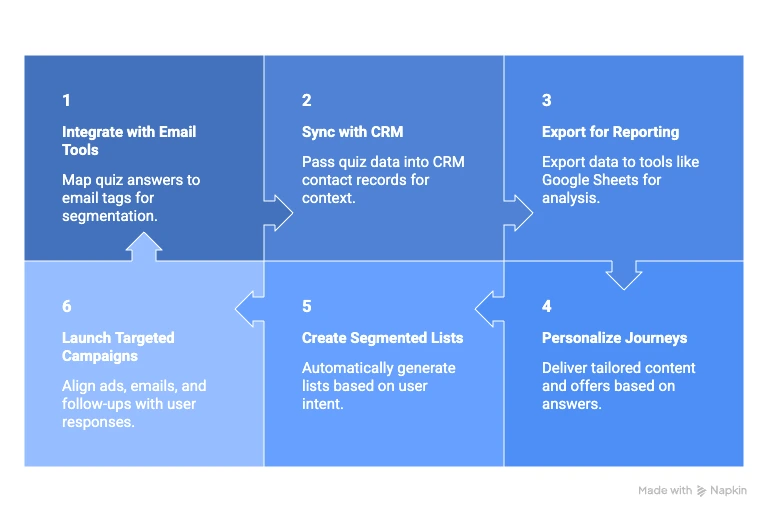
Quiz data can also be sent to a CRM through direct integrations, automation tools like Zapier, or webhooks. Once the data is inside the CRM, sales and marketing teams have context before taking action. They can see the user’s needs, intent, or readiness level directly in the contact record, which leads to better follow-ups and fewer unnecessary touchpoints.
For reporting and analysis, quiz responses can be exported to tools like Google Sheets. This makes it easier to review patterns over time, identify common problems, and understand which segments perform better. These insights can then be used to adjust quiz questions, refine messaging, or improve campaign structure.
When quiz results are connected properly, they support several marketing workflows:
- Personalized journeys: Users receive content and offers based on their answers, not generic campaigns.
- Segmented lists: Lists are created automatically based on intent, needs, or readiness.
- Targeted campaigns: Ads, emails, and follow-ups are aligned with what users actually shared.
If you want to go deeper into how quizzes fit into lead funnels and automation flows, this breakdown of quiz funnel tools and setups is a useful next step: Best Quiz Funnel Tools for WordPress (Compared for Marketers)
Platforms like Quiz and Survey Master (QSM) make this easier to implement. QSM allows you to tag users based on quiz answers, trigger basic workflows, export structured data, and connect quizzes with common email, CRM, and automation tools. This helps teams move smoothly from quiz responses to real marketing actions without complex setup.
Examples of Zero-Party Data You Can Collect via Quizzes
Quizzes can collect different types of zero-party data depending on how the questions are framed. Below are practical data types with example question snippets that can be used directly in quiz setups.
Preferences (style, interests)
This data helps understand what users like and how they prefer to engage with content, products, or services.
Example questions:
- “Which option best matches your working style?”
- “What kind of content do you usually spend time on?”
- “Which format do you find easiest to follow?”
Intent (buying stage)
Intent data shows where a user is in their decision process and how soon they might act.
Example questions:
- “What best describes your current situation?”
- “Are you actively looking for a solution right now?”
- “When do you expect to make a decision?”
Use cases (problem, workflow)
Use case data explains why a user is looking for a solution and how they plan to use it.
Example questions:
- “What are you mainly trying to fix or improve?”
- “Where does this fit into your current workflow?”
- “Which task takes up most of your time today?”
Decision logic (what they value)
This data highlights what matters most to users when choosing a product or service.
Example questions:
- “What matters most when choosing a solution?”
- “Which factor influences your decision the most?”
- “What would make this option a good fit for you?”
Readiness to engage or purchase
Readiness data helps separate early-stage users from those who are closer to taking action.
Example questions:
- “How prepared do you feel to move forward?”
- “Which statement best reflects your current level?”
- “What support do you need before taking the next step?”
What to Do with the Data (Activation)
Once zero-party data is collected, the next step is to use it across marketing and sales workflows. The goal is to turn quiz responses into clear actions, not store them passively.
- Create segmented email campaigns: Use quiz answers to place users into different email sequences based on intent, preferences, or readiness. This ensures users receive messages that match their stage and needs.
- Personalize content delivery: Show guides, case studies, or resources based on what users value or the problems they shared. This makes content more relevant and easier to engage with.
- Build lookalike audiences: Use high-quality quiz segments to create lookalike audiences for paid campaigns. This helps reach users who are similar to your best-fit leads.
- Feed retargeting platforms: Retarget users with ads that reflect their quiz responses, such as specific goals or challenges, instead of repeating generic messages.
- Improve product positioning: Review quiz data regularly to identify common patterns in needs, decision factors, and objections. Use these insights to refine messaging, offers, and product positioning.
Best Practices (Execution Tips)
Use this checklist to review your quiz before launch and during optimization.
- Explain clearly how quiz data will be used and stored
- Offer a result or recommendation that feels useful
- Ask only questions that support segmentation or follow-ups
- Keep the quiz short to maintain completion rates
- Order questions to reduce friction and early exits
- Use conditional logic to show only relevant questions
- Label answers clearly for email and CRM automation
- Follow privacy and consent requirements
- Test, review, and refine the quiz over time
Closing Thoughts on Quiz-Based Zero-Party Data
Zero-party data works best when it is collected with intent and used immediately. Quizzes provide a simple and reliable way to ask the right questions, collect permission-based data, and turn user inputs into clear marketing actions.
The value does not come from the quiz alone. It comes from how well the quiz is designed, how cleanly the data flows into your tools, and how consistently the answers are used for segmentation, personalization, and follow-ups. When quizzes are connected to email, CRM, and reporting systems, they stop being engagement assets and start functioning as part of your marketing infrastructure.
If you are looking to improve lead quality, reduce guesswork, and build more relevant campaigns, quizzes are a practical starting point. Start small, focus on one clear data goal, and build workflows that turn quiz responses into real outcomes. Over time, this approach helps you understand users better and market with fewer assumptions and more clarity.
Start collecting zero-party data with powerful quizzes. Create your first quiz with QSM.