As an educator, you only need to supervise one thing during an exam: that the work is genuinely your student’s own. In a physical classroom, you do that by walking in aisles. Online, you need something else.
A WordPress exam plugin becomes your invisible invigilator—creating secure exams, stopping the common cheating tricks, and surfacing red flags that tell you when a result can’t be trusted.
In this guide, we’ll explore our online exam WordPress plugin — Quiz and Survey Master, focusing on its key security features and best practices to maintain exam authenticity and reliability.
Table of Contents
Meet QSM: Your Secure Online Exam Setup
Quiz and Survey Master is a WordPress plugin that turns your existing site into a full exam platform—no separate software, no per-student licensing, no exporting grades from a third-party tool. You build the exam on a single dashboard, and you own the data.
What makes it work for real assessments isn’t one headline feature; it’s a stack of controls underneath. You choose the question types, break long exams into timed pages, and set exactly how scoring works.
Then you layer on the security: who’s allowed in, how many attempts they get, deadlines set, and through the Quiz Proctor add-on, what happens if someone tries to switch tabs or paste an answer.
The result is an exam you can actually trust. Whether you’re a teacher running a midterm, a training department certifying staff, or a hiring team screening candidates, you get the same thing: results that reflect what the test-taker actually knows, not what they managed to look up.
The Key Security Features That Do the Work
Settings are one thing, but knowing which ones actually prevent cheating is another. Here is what each QSM feature buys you, in plain terms.
1. Access user control: no account, no exam
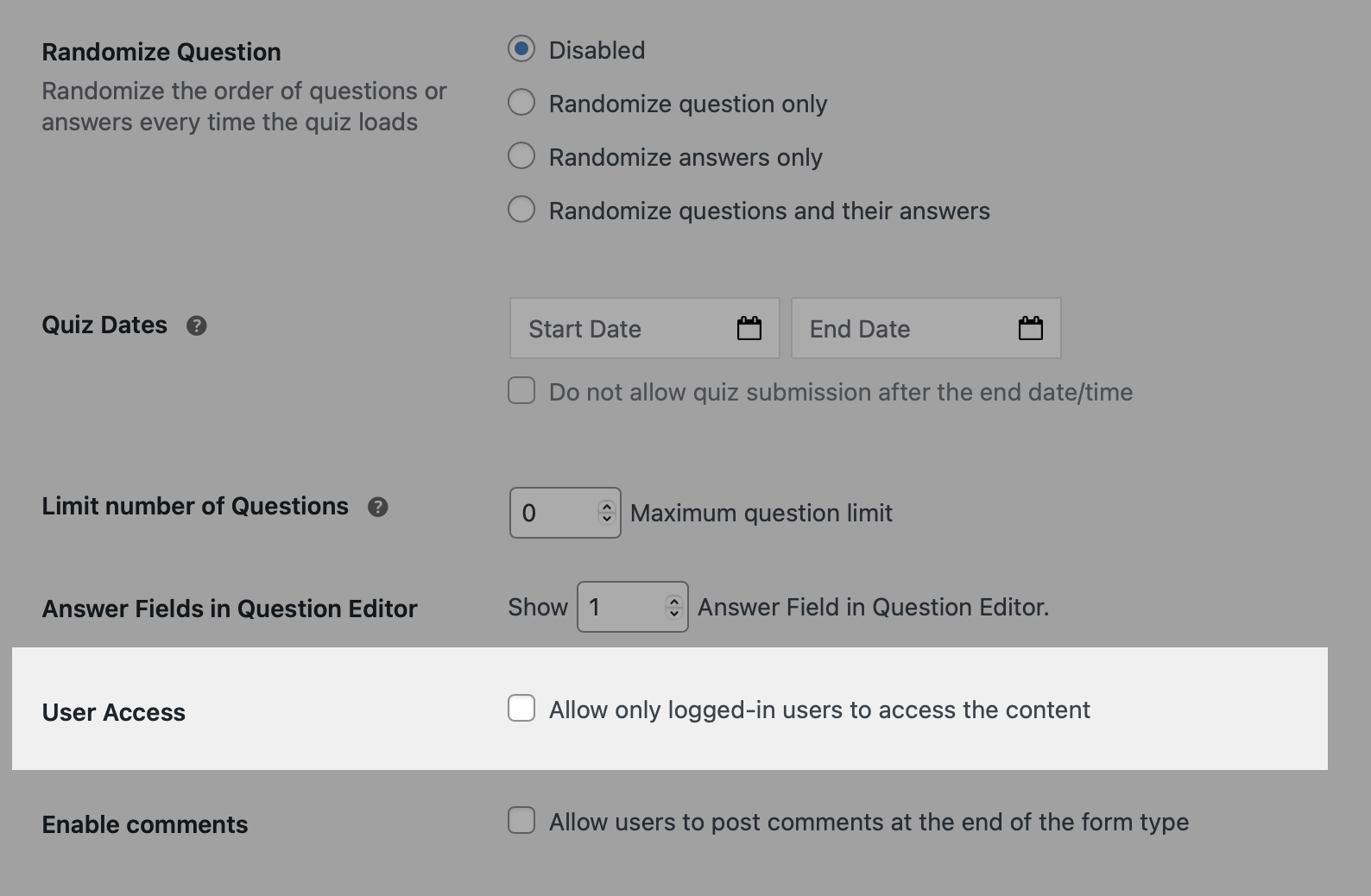
You can restrict the exams to only logged-in users, which means no students’ names & email IDs, which means no entry. Now, you don’t have to worry about anonymous results floating around in your result data.
By doing so, unauthorized individuals are prevented from accessing the content, thereby maintaining the security of your online exams.
2. Proctoring: your invigilator when you can’t be there
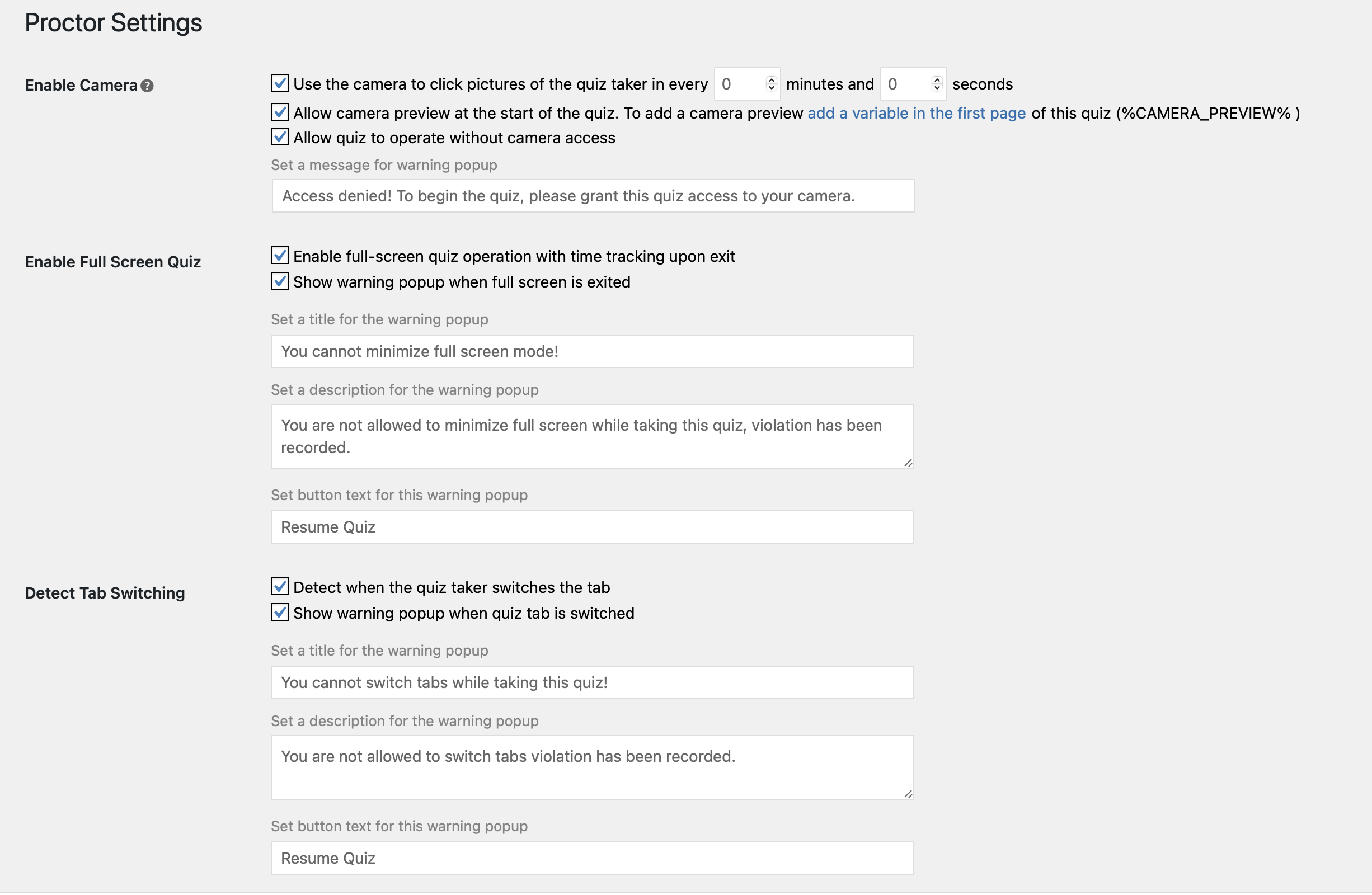
The Quiz Proctor add-on is the heart of a secure remote exam. It flags tab-switching the moment a student leaves the test, forces full-screen so they can’t peek at another window, blocks copy-and-paste, and can take camera snapshots during the exam.
You get all these red flags when you have the result with a timestamp, so you can review them after. This way, you can evaluate results honestly.
3. Per-page time limits: no stopping on the easy stuff
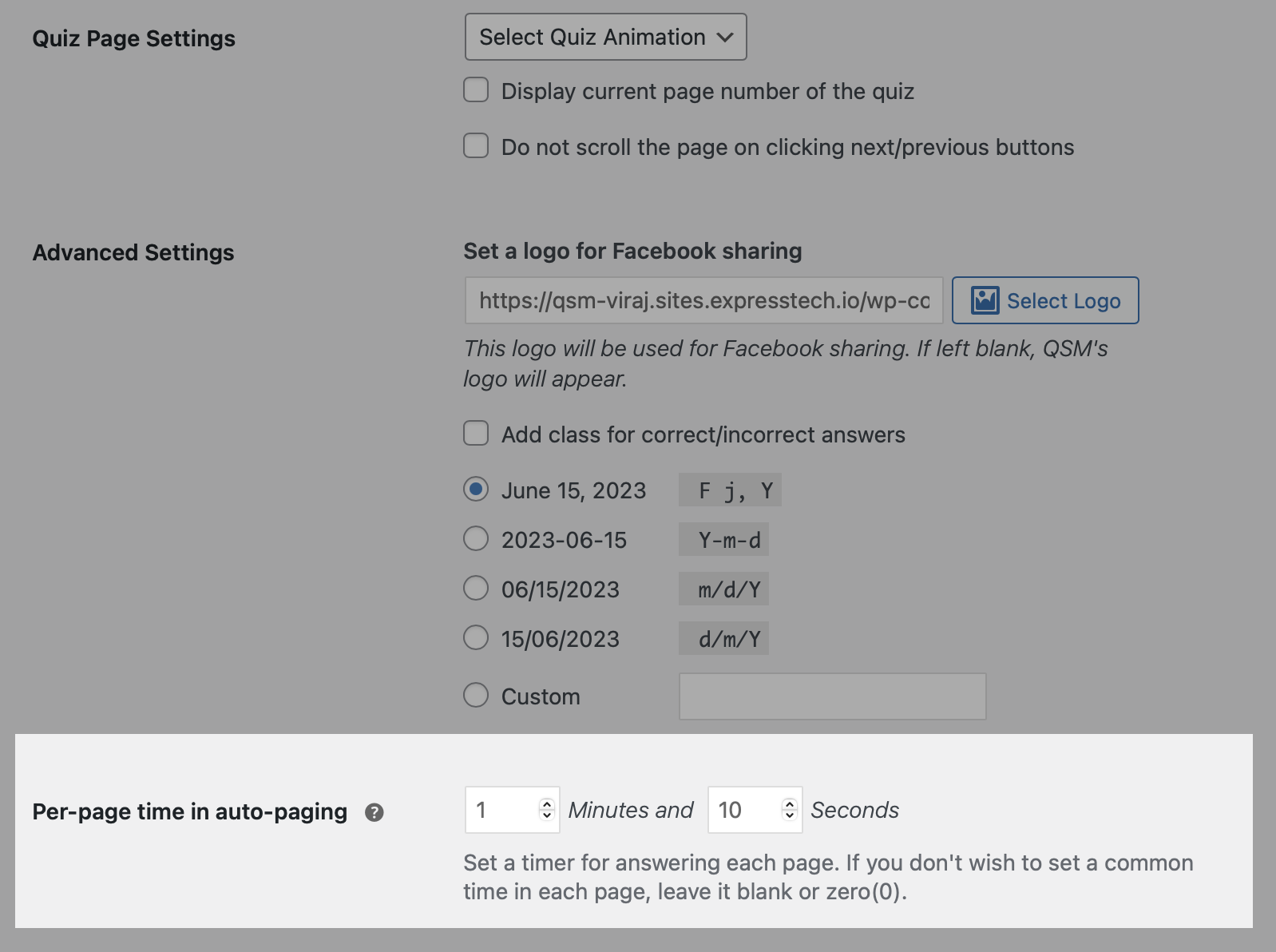
Give each page/section its own timer: 10 minutes for the logic and 20 minutes for the essay. Students can’t bank on the questions they know to go research the ones they don’t. You give them a limited time per page, which creates a constraint on completing the individual sections.
4. Quiz controls: one limit, one student
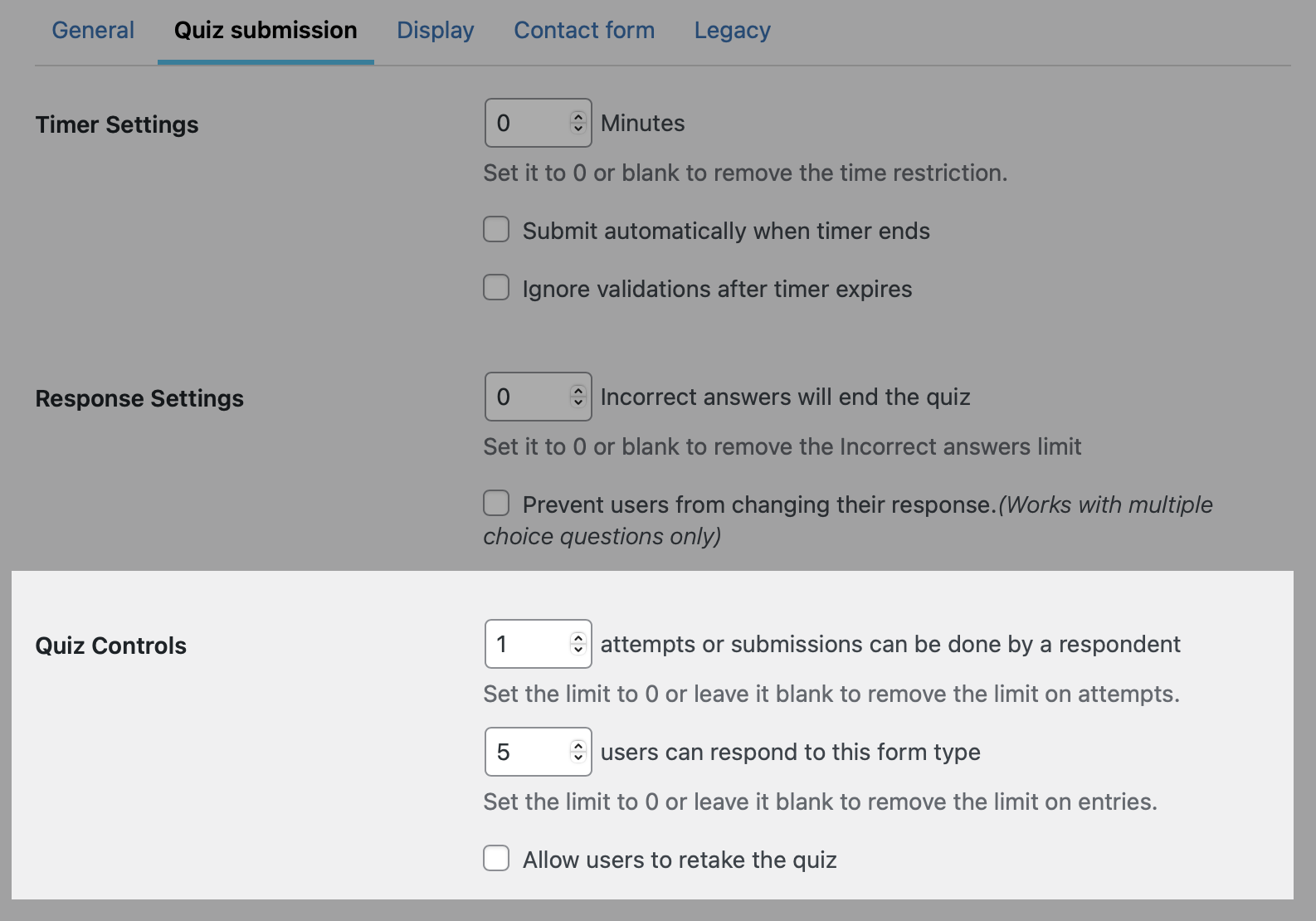
Securing an online exam doesn’t always require advanced settings or add-ons; sometimes, through subtle methods, you can ensure the security of your assessment.
You can allow each student a single attempt and limit total entries. Even if your exam link leaks, it can’t be passed around and reused with the same ID or aside from the set number of students.
5. reCaptcha: bots out before they start
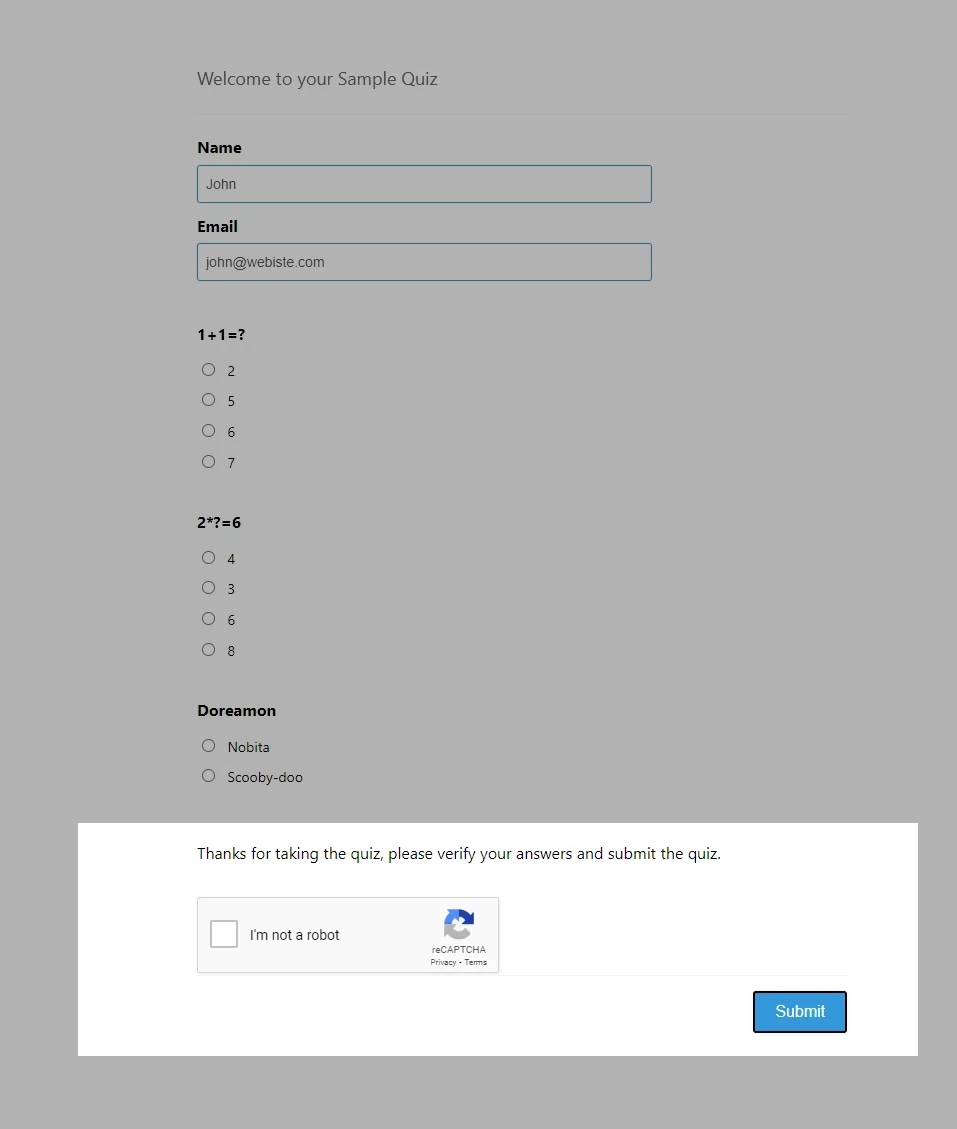
The incorporation of reCAPTCHA serves as a crucial security measure to prevent automated bots and unauthorized access. A quick human-verification check keeps automated scripts and fake submissions off your exam entirely; with difficulty, you can dial up for higher-stakes tests.
6. Randomize questions: same exam, no two alike
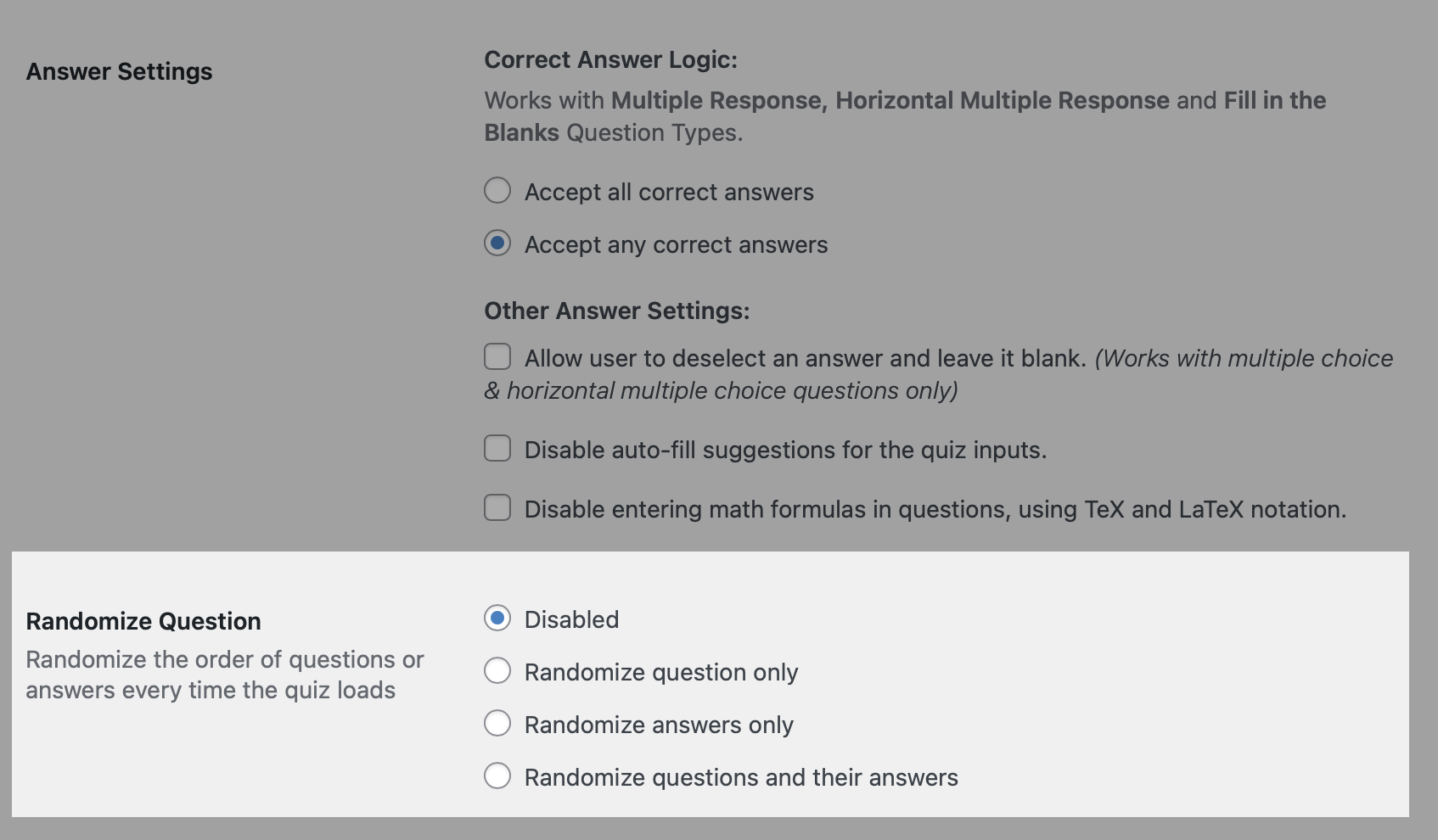
Randomizing the set of questions and answers is like playing mind games with your students. It is likely one of the most used and ideal ways, aside from proctoring, to make sure cheating gets difficult for students. It is also the most used way in physical exam situations.
7. Schedule exam dates: decide on timeline for when to submit
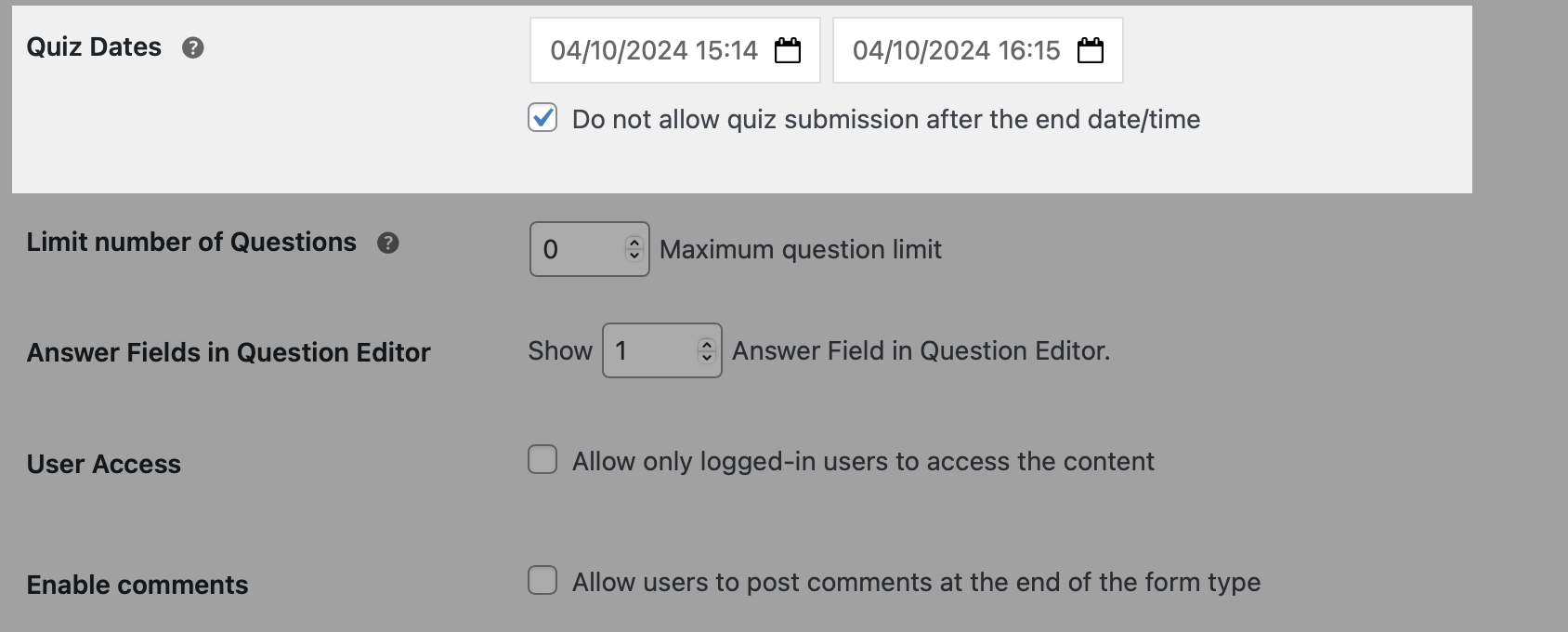
Scheduling exam dates may not directly be a way to secure an exam. But it definitely allows for the precise scheduling of exam sessions, ensuring that assessments are accessible to users only during designated periods. In this way, you keep the timeline controlled and within your hands.
Best Practices for Securing Online Exams
Maintaining a secure online exam environment is crucial to ensure the integrity of the assessment process. In addition to leveraging the features of QSM, implementing the following best practices can further enhance exam security –
- User Authentication: Implement strong user authentication measures to verify the identity of exam participants. Consider using multi-factor authentication (MFA) or two-factor authentication (2FA) to add an extra layer of security to user accounts.
When creating an exam in QSM, you can opt to include a password question as one step, and another step can involve adding a ‘Captcha’ question type before proceeding further to take the exam.
- Regular Updates: Keep your WordPress, QSM, and other related plugins up-to-date with the latest security patches and enhancements. Regular updates help address potential vulnerabilities and ensure the continued security of the online exam platform and in return a secure exam.
- Monitoring and Reporting: Regularly monitor exam activities and user interactions within QSM to detect any suspicious behavior or irregularities. Utilize reporting tools to generate insights into exam performance and also identify areas for improvement in exam security measures.
In the End
Securing online exams with a reliable WordPress plugin like QSM is essential for maintaining the integrity, fairness, and trustworthiness of the assessment process.
By leveraging QSM’s robust security features, including access control, anti-cheating measures, and best practices, you can create a secure exam environment that protects sensitive information and prevents unauthorized access.